The Mug Says Rip
Adam McKay's comet comedy is smug, shrill and about forty minutes too pleased with itself, and it has aged into a better prophet than anyone wanted.

Nearfi scores Don't Look Up (2021) 6.6/10 as art. The first half, where two scientists try to be heard, is sharp, and its warning-machinery is detailed and accurate. As prophecy, its P(n) is 81%: The warning office and the first real deflection test exist, and so does the split over scientific alarms; the comet mine and a deflection built in months do not.
- The first half, where two scientists try to be heard, is sharp, and its warning-machinery is detailed and accurate.
- McKay shouts every joke, hits the same target repeatedly, and runs 138 minutes when the idea needed about ninety.
- Its villains are the news cycle and the sponsor, not the rock, and its science was vetted by a working astronomer.
The warning office and the first real deflection test exist, and so does the split over scientific alarms; the comet mine and a deflection built in months do not.
- ARRIVED A credible scientific warning of a catastrophic, shared threat is met with polarised disbelief, media framing as entertainment and political delay, split along party lines.
- ARRIVING A spacecraft can be sent to change the course of an incoming comet or asteroid, including by nuclear means, in the time a late warning allows.
- NEAR A private company mines a comet or asteroid for metals at a profit, and a government lets that prospect override a defence plan.

The warning office and the first real deflection test exist, and so does the split over scientific alarms; the comet mine and a deflection built in months do not.
Nine months after a film in which the American government could not be bothered to hit a comet, NASA hit an asteroid.
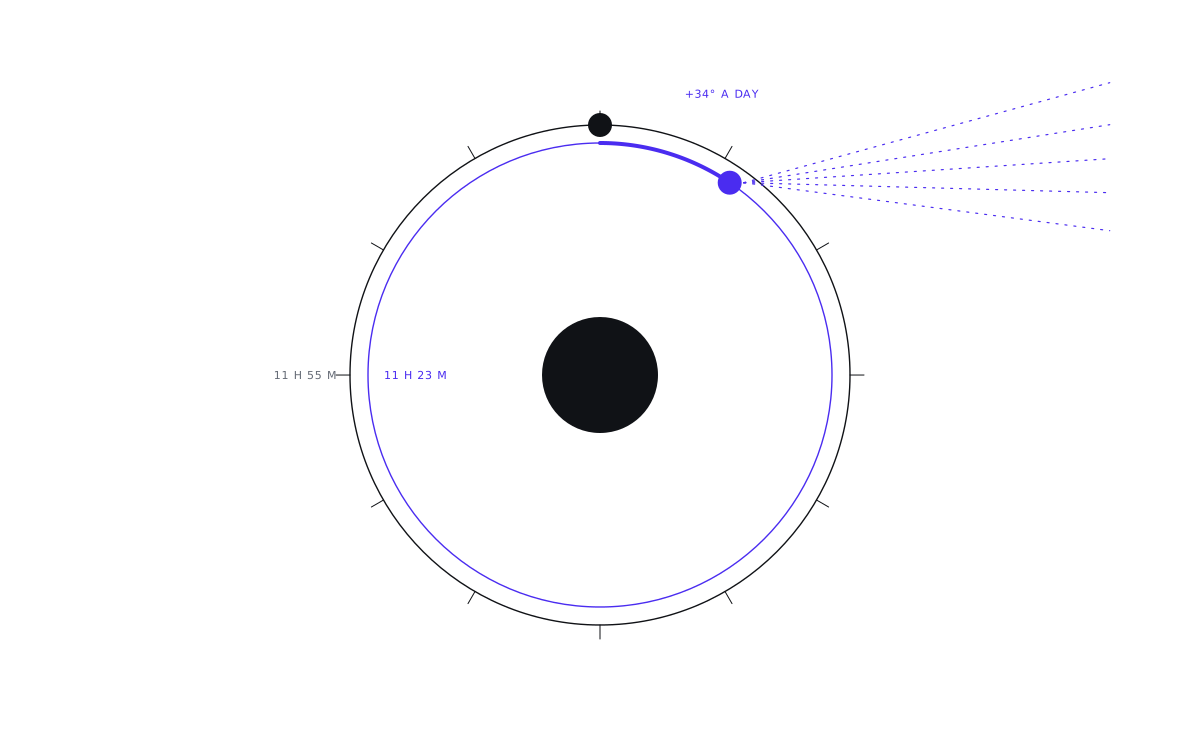
Don't Look Up arrived on Netflix on 24 December 2021. The DART spacecraft struck the 160-metre moonlet Dimorphos on 26 September 2022 and shortened its orbit by about 32 minutes, against a success threshold of 73 seconds. The rocket was never the problem. That, in one sentence, is McKay's argument, and it is the sound part of a loud film.
The setup is simple. Kate Dibiasky (Jennifer Lawrence), a doctoral student at Michigan State, finds a comet. Her supervisor Randall Mindy (Leonardo DiCaprio) works out that it will hit Earth in about six months, with extinction-level results. They are believed by the head of NASA's Planetary Defense Coordination Office, Teddy Oglethorpe (Rob Morgan), and by nobody else with any power. Meryl Streep plays a president called Janie Orlean who is mostly interested in the midterms. Jonah Hill plays her son and chief of staff. Mark Rylance plays Peter Isherwell, the head of a tech company called BASH.
The art: a film that cannot stop pointing
The first act works. Two scientists with a calculation brief the White House and meet apathy. The film gets the small humiliations of expertise right: a result that would end the world is treated as an awkward item in a diary. Lawrence is the best thing in it. Her Kate loses her temper on live television, becomes a meme within the hour, and is treated from then on as a person with a temperament, not a person with a measurement.
The television studio is the film's best set. Cate Blanchett and Tyler Perry host The Daily Rip, where the mugs have the show's name on them and a grave announcement is always followed by a joke about a celebrity break-up. This is the film's finest joke, because nothing in it is exaggerated much. The scenes in the studio are sharper media criticism than much of the actual media criticism of the period.
Then the film does what it does throughout, and keeps going. The second half keeps hitting the same bell. A pop-star subplot with Ariana Grande and Kid Cudi turns a campaign called "Just Look Up" into a song, which the other side counters with "Don't Look Up". The score and cutting, by Nicholas Britell and Hank Corwin, are quick and abrasive and, by the hour mark, merely exhausting. McKay does not trust you to infer anything. He will not leave a subtext alone in a room.
Critics split on it, and the split was about tone, not fact. Climate scientists mostly liked it, since they recognised the experience. Many critics found it smug, with some justice. A satire that despises everyone in the frame, the scientists included, ends up with nobody to stand beside. It was also a hit. It set a weekly viewing record for a Netflix film, 152 million hours, in its second week, and it earned four Oscar nominations, among them Best Picture. A lot of people looked up. Whether it changed what they did is another question, and the film is too busy mocking the answer to ask it.
The prophecy: warning, rock, mine
The warning. The film's science is better than its reputation. The consultant was the astronomer Amy Mainzer, who has said she helped design the comet and chose a comet rather than an asteroid: a long-period one, about nine kilometres wide, loosely modelled on Comet NEOWISE. That choice is the right one. More than 90 per cent of asteroids a kilometre or larger are already known, and none is a known hazard; a comet from the outer solar system is the exception that gives months. NASA's Planetary Defense Coordination Office is real, and has been since 2016. The gap the film dramatises is real as well. That puts the machinery of detection, the one thing nobody in the film is at fault for, in the "arrived" column.
The rock. The film launches a nuclear deflection mission and then aborts it. The first half has now been tested, on a small scale and without the bombs. DART moved a rubble pile 160 metres across, and the result is excellent news. It is not a guarantee. One rubble pile, an unmeasured mass and years of preparation are a long way from a nine-kilometre comet and a deadline of six months. The nuclear route is a separate problem: legal scholars point out that treaties limiting nuclear explosions in space were written without a comet in mind, and nobody has agreed in advance who may break them. The film assumes that a decision can be made and a mission built in months, and that the only thing in the way is will. In 2025, a 60-metre asteroid called 2024 YR4 briefly looked like a threat to Earth in 2032, and the lesson was in the timeline: Earth was ruled out, the Moon was ruled out a year later, and nobody had to build a spacecraft in a hurry. We have been spared the test.
The mine. This is the film's biggest invention, and the second half depends on it. Isherwell learns the comet is full of valuable rare earths, and the president, who has just launched a deflection, aborts it. The comet is to be broken up and harvested. American law has allowed citizens to own what they recover from an asteroid since 2015. Actual asteroid mining is, so far, a graveyard of start-ups. Planetary Resources folded in 2018, and AstroForge lost its first probe in March 2025. The mine is plausible in principle and nowhere close in practice. What the film gets right is the grammar of it: a technology firm that takes over a government decision, with an algorithm for everything, including, at the end, a forecast of how the president will die.
The reading
Don't Look Up is a mediocre comedy and a good warning, and it is odd to say both at once. It is at its best when the people are small and the schedule is large, and worst when it stops to explain itself. McKay said the film grew out of his fear about the climate crisis, and it works as a diagram of the loop that the next decade will test again: the alarm, the scepticism, the framing, the sponsor, the delay. Pew's most recent survey finds Americans split along party lines, 87 per cent of Democrats against 31 per cent of Republicans, on whether the government is doing too little about climate change. That is a slower threat than a comet, and a bigger gap than any scientist would like.
The best argument in it is the dullest. The hard part of planetary defence is the part around the rocket: finding the thing, being believed, deciding who flies. We now know the rocket works. We have not yet shown that anyone will be believed in time to use it.
What it predicted, and what happened
Don't Look Up is most accurate about the human machinery around a warning: a standing planetary-defence office exists, and the partisan split over scientific alarms is well documented. Its physical science is better than its reputation, and a real spacecraft has since moved an asteroid. It is furthest from reality in its comet mine, and in assuming that a deflection mission could be built and launched within months.
How this P(n) was calculated
P(n) is the chance that this work's future arrives within 20 years, by 2046. For each prediction we turn our estimate into a probability: arrived is 100%, diverged is 0%, and otherwise the low end of our 80% range counts as a 10% chance, the median year 50% and the high end 90%. Each prediction is weighted 1–5 by how pivotal it is to the story, and P(n) is the weighted average. P50 does the same by 2076. P(n), explained.
| Claim | Prediction · why this weight | Weight | Status · estimate | By 2046 | By 2076 |
|---|---|---|---|---|---|
| DLU-1 | A credible scientific warning of a catastrophic, shared threat is met with polarised disbelief, media framing as entertainment and political delay, split along party lines. Core premise: the comet is the backdrop, and the film is about why a warning is ignored. |
5 | ARRIVED arrived 2020 | 100% | 100% |
| DLU-2 | A spacecraft can be sent to change the course of an incoming comet or asteroid, including by nuclear means, in the time a late warning allows. Major: the abandoned deflection mission is the central choice the plot turns on. |
4 | ARRIVING 2035 (2030–2055) | 72% | 100% |
| DLU-3 | A standing government office tracks hazardous objects and issues impact warnings, but cannot see everything, such as a long-period comet, far enough ahead. Supporting: the office is how the heroes learn the news and what sidelines them. |
3 | ARRIVED arrived 2016 | 100% | 100% |
| DLU-4 | A private company mines a comet or asteroid for metals at a profit, and a government lets that prospect override a defence plan. Major: the mining plan is why the deflection is cancelled and drives the second half. |
4 | NEAR 2045 (2035–2070) | 52% | 92% |
| P(n) = P20 = Σ(weight × chance by 2046) ÷ Σ weight = 12.9 ÷ 16 = 81% | |||||
| P50 = 15.7 ÷ 16 = 98% | |||||
Already here today (arrived 1, arriving ½, weighted): 62%.
-
DLU-1
A credible scientific warning of a catastrophic, shared threat is met with polarised disbelief, media framing as entertainment and political delay, split along party lines.
Weight 5/5 · Core premise: the comet is the backdrop, and the film is about why a warning is ignored.
The pattern is documented on slower threats. Pew has found a gap of at least 51 percentage points between Democrats and Republicans on whether the US government is doing too little about climate change every time it has asked since 2018, and in 2020 found wide splits on whether human activity drives climate change. It has not been tested on a threat with a date on it. The film exaggerates the uniformity of the response: majorities in both parties back specific measures, so the disagreement is partly about who is speaking, not only about the facts. 123
-
DLU-2
A spacecraft can be sent to change the course of an incoming comet or asteroid, including by nuclear means, in the time a late warning allows.
Weight 4/5 · Major: the abandoned deflection mission is the central choice the plot turns on.
NASA's DART spacecraft struck the 160-metre moonlet Dimorphos in September 2022 and shortened its orbit by about 32 minutes, against a minimum success target of 73 seconds. That settles the principle for a small rubble-pile asteroid. It does not show a kilometre-scale comet can be moved, nor that a mission can be built in months: DART took years. Nuclear deflection is untested and legally contested. We set the date for a standing, rapid-response capability, which no agency has promised. 456
-
DLU-3
A standing government office tracks hazardous objects and issues impact warnings, but cannot see everything, such as a long-period comet, far enough ahead.
Weight 3/5 · Supporting: the office is how the heroes learn the news and what sidelines them.
NASA set up its Planetary Defense Coordination Office in 2016, the same title the film gives Dr Oglethorpe's employer. NASA says no known asteroid larger than 140 metres has a significant chance of hitting Earth in the next 100 years. The gap the film dramatises is real too: long-period comets are not surveyed in the way near-Earth asteroids are, and a 1997 estimate by a JPL scientist put the warning at under a year. NASA's infrared NEO Surveyor, due no earlier than September 2027, is aimed at the wider gap but is a survey of asteroids, not a comet alarm. 78910
-
DLU-4
A private company mines a comet or asteroid for metals at a profit, and a government lets that prospect override a defence plan.
Weight 4/5 · Major: the mining plan is why the deflection is cancelled and drives the second half.
US law since 2015 gives American citizens the right to own, sell and use resources they recover from an asteroid, and start-ups are trying. None has yet returned material or earned money from it: AstroForge lost contact with its first spacecraft in March 2025, and Planetary Resources, which led the field a decade ago, folded after failing to close a funding round in 2018. The second half of the claim, a government dropping a defence plan to chase minerals, has no real parallel, so this rates the mine, not the cancellation. 111213
- FOR Americans Are Increasingly Pessimistic About Avoiding the Worst Effects of Climate Change. Pew Research Center, 2026-05-28. In March 2026, 87% of Democrats and 31% of Republicans said the federal government is doing too little on climate; the gap has been at least 51 points since 2018.
- FOR Two-Thirds of Americans Think Government Should Do More on Climate. Pew Research Center, 2020-06-23. In 2020, 72% of Democrats but 22% of Republicans said human activity contributes a great deal to climate change.
- AGAINST Two-Thirds of Americans Think Government Should Do More on Climate. Pew Research Center, 2020-06-23. The same survey found bipartisan majorities for specific measures, such as 88% of Republicans backing tree planting and 78% a tax credit for carbon capture.
- FOR NASA Confirms DART Mission Impact Changed Asteroid's Motion in Space. Johns Hopkins Applied Physics Laboratory, 2022-10-11. Dimorphos's orbit fell from 11 hours 55 minutes to 11 hours 23 minutes, a margin of about plus or minus 2 minutes.
- AGAINST Momentum transfer from the DART mission kinetic impact on asteroid Dimorphos. Nature (via PubMed Central), 2023-03-01. The result is for one rubble pile, and Dimorphos's mass is poorly constrained, so the push could not yet be turned into a general rule.
- AGAINST Impact of an asteroid on Earth: the need for legal clarifications. Leiden Law Blog, 2020-06-08. Argues that treaties, including the Partial Test Ban Treaty, bar nuclear blasts in space and that a planetary-defence weapon is still a weapon.
- FOR Planetary Defense Overview. NASA, 2026-11-04. NASA established the Planetary Defense Coordination Office in 2016; there is no known asteroid over 140 m with a significant impact chance in the next 100 years.
- AGAINST Long-Period Comets and the Oort Cloud. Annals of the New York Academy of Sciences (via NASA NTRS), 1997-01-01. Weissman says long-period comets can be spotted at about 5 AU, giving somewhat less than a year's warning, and that better detection is needed.
- AGAINST How Meteor Showers Can Guide the Search for Long Period Comets. arXiv (Hemmelgarn, Moskovitz, Pilorz, Jenniskens), 2024-10-03. A 2024 paper says long-period comets mostly go unseen until they are inbound, so they give little advance notice.
- CONTEXT The Real Science Behind the Movie Don't Look Up. Universe Today, 2021-12-28. The film's science consultant, Amy Mainzer, says surveys cover long-period comets less completely than asteroids, which are a bigger unknown.
- FOR 51 U.S. Code Chapter 513: Space Resource Commercial Exploration and Utilization. US Government Publishing Office, 2023-01-01. A US citizen who recovers an asteroid or space resource is entitled to possess, own, transport, use and sell it, subject to applicable law including international obligations.
- AGAINST AstroForge. Wikipedia, 2026-11-04. Records that AstroForge declared its Odin asteroid probe lost on 6 March 2025, and that a follow-up demonstration mission is planned.
- AGAINST Planetary Resources. Wikipedia, 2026-11-04. Records that in 2018 the company failed to close a funding round, postponed its first prospecting mission indefinitely and was acquired by ConsenSys.
Ledger updated 4 Nov 2026. Open this ledger as its own page · The P(n) Board · Method
Themes: Space · AI and machine minds
Featured in: Sci-Fi About Space: 6 Stories About Mars, the Moon, Orbit and Asteroids