Default Settings Are the Real Legislation
In 2012 the British government braced for three in ten workers to quit their new pensions. About one in ten did. The most powerful law in your life may be a box somebody else ticked.
In October 2012, the largest employers in Britain began doing something that sounded almost rude. They started putting their staff into a pension without asking.
Nobody was forced. Every worker could leave with a form and a few minutes' effort. The government's own research had found that 30 per cent of workers were likely to do exactly that, and that was the number people expected to see leaving.
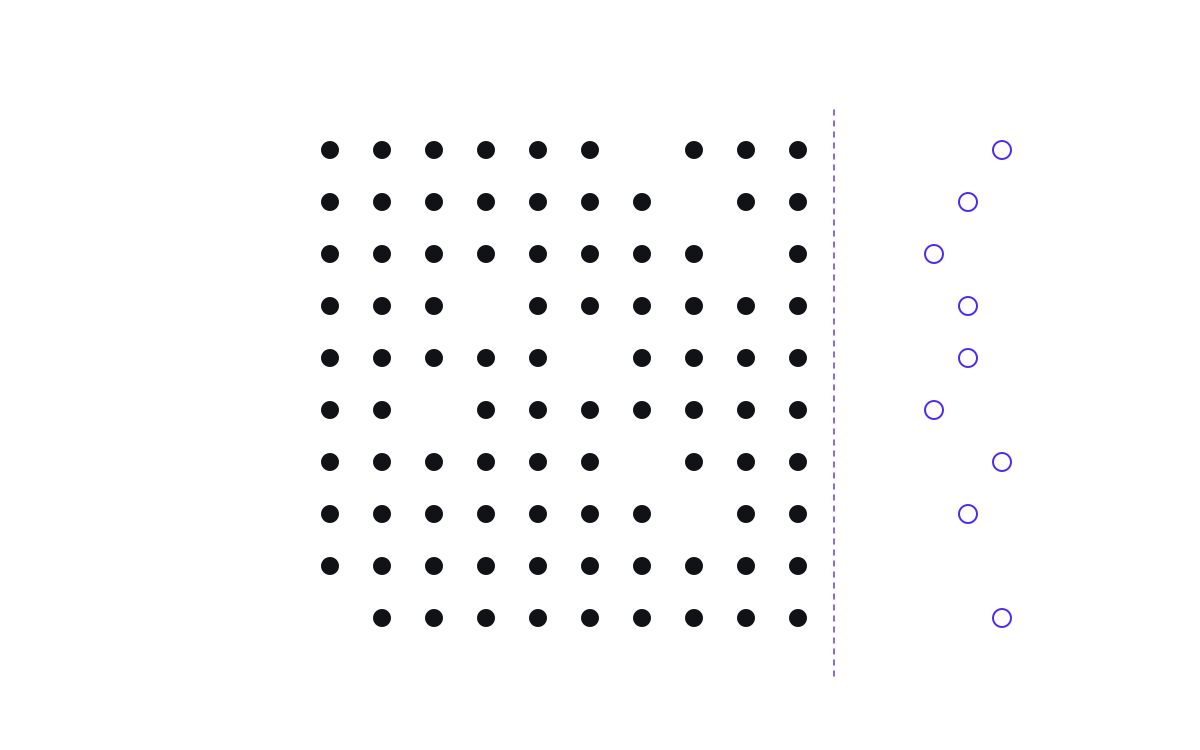
They didn't. In August 2013 the Department for Work and Pensions published its first look at fifty of the biggest employers. On average, 9 per cent of the people who had been enrolled had opted out. Most employers fell between 5 and 15 per cent. Later DWP figures put the rate at about 10 per cent, and it stayed there.
The pension itself hadn't changed. The tax treatment hadn't changed. The workers hadn't been told anything new about retirement. What changed was which box was ticked when they arrived.
That is the whole subject of this essay. We think of power as something that gets announced: a statute, a ruling, a vote. But in a large share of daily life, the thing that decides what people do is the starting position, and the starting position is written by someone you will never meet. It carries no debate, no appeal and no sunset clause. It is legislation with the label peeled off.
Economists noticed this early, and the best-known early demonstration is almost comically dry.
Brigitte Madrian and Dennis Shea studied a large American company that changed its 401(k) retirement plan. Before the change, employees had to choose to join. After it, they were enrolled automatically and immediately, unless they made a "negative election" to get out. The paper, published in the Quarterly Journal of Economics in 2001 under the title "The Power of Suggestion", found that participation was significantly higher under automatic enrolment. More striking was what people did once they were in. Many of the new hires kept both the default contribution rate and the default fund, a combination that few of the people hired before the change had ever picked for themselves.
The authors offered two explanations. One was inertia. The other is the more interesting: employees read the default as advice. The company had put it there, so it must mean something. Nobody had said "we recommend this", and everybody heard it.
Keep hold of that second point. A default isn't only a path of least resistance. It's a message, and the message is: this is what normal people do here.
The most famous default of all comes with a warning label, and the warning is part of the story.
In 2003, Eric Johnson and Daniel Goldstein published a short paper in Science called "Do Defaults Save Lives?" Its headline contrast was between Austria, where everyone is presumed to be an organ donor unless they register otherwise, and Germany, where you have to sign up. In Austria, 99.98 per cent of people were in the donor pool. In Germany, 12 per cent were. Those two numbers have been quoted in a thousand talks about nudging.
They deserve a footnote, though. The figures measure who is registered as willing, not how many organs are transplanted. The analyst Jason Collins has pointed out that actual deceased-donor rates were far closer: about 15.3 per million people in Germany against 18.8 in Austria. In practice, families are consulted, hospitals have capacity limits, and a presumed yes does not wheel itself into an operating theatre. The default shaped the paperwork enormously and the outcome modestly.
That is a useful correction to the legend, and it makes the point sharper rather than weaker. Defaults are strongest where the action is a single click or a single signature, and weaker where the world pushes back. A pension enrolment is a single signature. A search engine is a single setting. A lot of what is now being built around us is closer to those than to a transplant.
Consider the search box.
In September 2025, Judge Amit Mehta of the US District Court in Washington issued his remedies ruling in the government's case against Google. The ruling noted that Google's payments to Apple and other distribution partners to be the default search engine came to more than $20 billion in the previous year. A business does not pay a sum like that for a feature people would find anyway. It pays because it knows what the pre-ticked box is worth.
The judge did not ban the payments. He warned that cutting them off would almost certainly cause substantial harm to distribution partners, and so he took a narrower route: Google may not make deals that require exclusivity, and default agreements are limited to one year at a time. The court did not abolish the default. It shortened its term.
Read that as a legal event and it's an antitrust remedy. Read it as political theory and something odder has happened. A court has looked at a setting and treated it as a kind of franchise, a thing that can be bought, leased and, with limits, renewed annually. Nobody voted on it. It was, in effect, a lease on the front door of the web, and for years the only party with a say was the one paying the rent.
Now put the same logic on the thing arriving next.
In the next few years, a growing share of what people do online will go through an assistant: something that answers for you, books for you, remembers for you. Every one of those assistants will ship with defaults, and they will be a different kind of default from a pension box. A pension default is a single decision made once. An assistant's defaults are decisions made constantly, in your name, in the background.
What will it remember about you unless told to forget? Will it take the cheapest option or the one from the partner? Does it keep the conversation, or discard it? When you're upset at 2am, does it keep talking? How long does it keep going before it suggests you ring someone?
Those are not features. They're clauses. In an earlier piece, The Kindest Machine, we looked at the case for companions that are endlessly patient. The question there was what such a machine should be allowed to give a lonely person. The question here is simpler and prior: who decides what it does when the person says nothing at all? Most people, most of the time, say nothing. That's not a failing. It's how a busy human manages a thousand settings. It means the default isn't the starting offer in a negotiation. For most people it is the outcome.
The usual reply is that people can change settings. They can, and the pension numbers show how it goes: nine in a hundred did. Ninety-one stayed.
It would be easy to turn this into a villain story, and it would be wrong. The British pension default is one of the great quiet successes of modern social policy. It moved millions of people into saving, and it did so by respecting their right to leave. A default is only a tool, and some tools are kind.
So the interesting question isn't whether defaults are manipulative. They're unavoidable. Every system has a state it starts in, and somebody picks it, even if the somebody is a developer on a Thursday afternoon with a deadline. There is no neutral setting. A form with an empty box is also a default: the default is nothing happens.
The interesting question is what separates a good default from a bad one. Three tests seem to survive contact with the evidence.
Whose interest does it serve? The pension default points toward what the person would plausibly choose with unlimited time and information. The search default points toward the party who paid for it. The same mechanism, opposite loyalties. If you can't tell whose side a default is on, ask who is paying for the placement.
Can it be seen and left? The British scheme has a way out, and about one in ten used it. A default that is hidden, or whose exit is buried three menus down, is no longer a nudge. It's a trap with good manners.
Does it expire? Judge Mehta's one-year limit is the most interesting idea in the whole ruling, because it treats a default like a lease, not a title deed. Defaults decay in the dark: the world changes, the setting stays. A rule that says "decide again" is cheap, and it is rarely applied.
There is a thought experiment worth running, flagged as one. It's not a prediction.
Suppose a country decided that phones should go quiet at 9pm unless the owner chose otherwise. Not a ban. No fine. Just a different starting state for notifications, and an easy way to turn it off. We have no study of this exact policy, so nobody can honestly say what it would do. But the pension numbers hint at the shape of the answer: most people would do nothing, so most phones would be quiet. A single line in a settings file would reorganise an evening across a nation, and the argument over whether it was right would take place almost entirely after the fact.
That's the unnerving thing about default-as-law. It reverses the order of democratic life. Normal legislation is argued first and felt later. A default is felt first and, if anyone notices, argued later.
The pull of this story is easy to resist because it feels too small. Nothing about a pre-ticked box looks like power. There are no uniforms. But the next ten years will be shaped less by the grand decisions that make headlines and more by a long run of unglamorous ones about what a system does when nobody tells it otherwise, in assistants, in schools, in banks, in the apps that mediate a child's evening.
Here is the practical part. When you meet a new product, find the setting it chose for you and ask who chose it. When you build one, write down the defaults in plain words and put a date next to each one, saying when somebody will review it. And when a government or a court acts, look for the default inside the decision, because it's usually where the real change is hidden.
In 2012, the boxes were ticked for ninety-one out of a hundred people, and for most of them it was the best thing anyone did for their retirement. That's the fork. The same pen can write a safety net or a toll booth. The difference is whether anyone was watching it write.
Sources: DWP, Workers say "we're in" to workplace pensions (2013); Madrian and Shea, The Power of Suggestion, NBER Working Paper 7682 (QJE, 2001); Johnson and Goldstein, "Do Defaults Save Lives?", Science (2003), and Jason Collins's critique of the donor figures at jasoncollins.blog; US v. Google remedies ruling (Mehta, September 2025) as reported by Mondaq and others.
Themes: AI and machine minds · Work