Ninety Minutes Is Not a Cascade
Cuarón's Gravity compressed the slow disaster of orbital debris into a single bad afternoon. The real version is quieter, and it has already started.

Nearfi scores Gravity (2013) 7.8/10 as art. Cuarón's long, unbroken shots put you inside the suit, and its opening sequence is some of the most controlled filmmaking of its decade. As prophecy, its P(n) is 52%: Debris has forced crews into lifeboats and cracked a Chinese capsule window; the cascade in a single afternoon remains fiction, the slow version is a live question.
- Cuarón's long, unbroken shots put you inside the suit, and its opening sequence is some of the most controlled filmmaking of its decade.
- Once the debris arrives the script shrinks to survival and a few speeches about grief, and the physics breaks in ways the film never needed.
- Its threat was an accident of crowded orbit, not a villain, which is how real space hazards turn up.
Debris has forced crews into lifeboats and cracked a Chinese capsule window; the cascade in a single afternoon remains fiction, the slow version is a live question.
- ARRIVED Debris from a destroyed satellite forces crews in orbit to take emergency action.
- DIVERGED One debris cloud wrecks a shuttle, a telescope and two space stations in different orbits within about ninety minutes.
- NEAR Collisions in low Earth orbit feed on themselves until some regions are too dangerous to use (Kessler syndrome).
Debris has forced crews into lifeboats and cracked a Chinese capsule window; the cascade in a single afternoon remains fiction, the slow version is a live question.
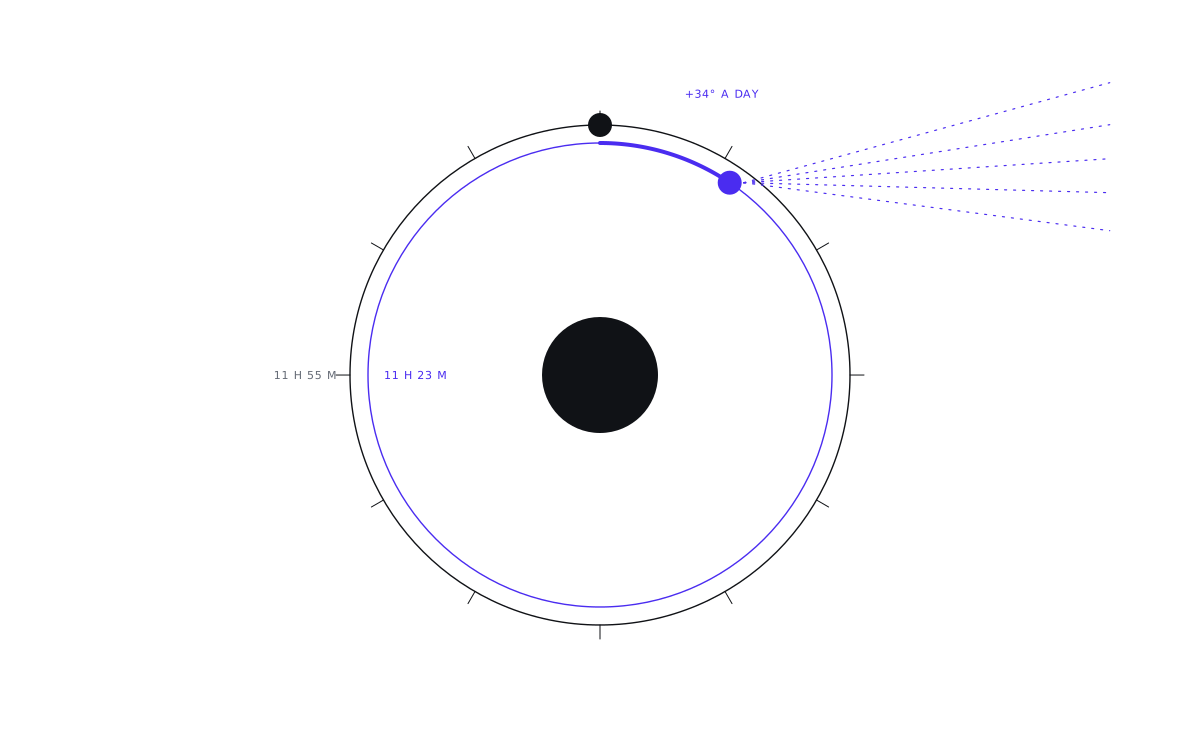
A film about a debris cloud that comes round every ninety minutes is, whatever else it is, a film about a schedule. Alfonso Cuarón, who directed Gravity, co-wrote it with his son Jonás and co-edited it, understood that. The Explorer shuttle crew is servicing the Hubble Space Telescope when Mission Control, voiced by Ed Harris, warns that debris from a destroyed satellite is heading their way. Then it arrives. Sandra Bullock's Ryan Stone, a medical engineer on her first flight, is torn loose and sent spinning. George Clooney's Matt Kowalski, the veteran commander, goes and gets her.
Reviewed now, in the year of ESA's latest annual Space Environment Report, it plays differently from how it played in 2013. The report, whose Issue 10.0 is dated 1 May 2026, says the exponential growth in the number of new payloads continued through 2025, with the highest launch traffic yet. The thing the film dramatised as a freak event is now a line item on an agency's annual audit.
The art: a long breath held
The craft is the reason to see it. The film opens with a long take that holds while the Earth turns and the crew drift into frame. It doesn't hurry, which is the nerve of the thing. Cuarón's camera moves from outside the helmet to inside it and back, and you share Stone's breathing before you know her name. It won seven of its ten Academy Award nominations, including Best Director, Cinematography, Visual Effects and Film Editing, and took about $723 million worldwide. Those numbers are less impressive than the fact that it was, for a time, the film people argued about on the way out.
Bullock is very good. She spends most of the film alone and has to make a person out of a voice, a pair of hands and a face in a visor. Clooney is charm on a tether, a man who makes a catastrophe sound like a day out, and the film knows he can't last. Their scenes together are the best in it.
It's also thin. Once Stone is alone the story becomes a ladder: the International Space Station, a Soyuz, a Chinese station, a Shenzhou capsule, and a lake. Each rung is a new obstacle and a new speech. The grief story that is meant to give it weight, a dead daughter, feels bolted on, and the film's most earnest dialogue is its weakest. I admired it more than I was moved by it, which is a respectable thing to say about a film this beautiful, and not a flattering one.
The physics are the other limit. Neil deGrasse Tyson, Phil Plait and the former astronaut Scott Parazynski all pointed out liberties, among them that Hubble and the ISS don't share an orbit and can't be reached from one another with a jetpack, as the film has it. Cuarón himself has said the film isn't always accurate and that he took liberties for the story. I'm not interested in docking it for that. But it matters to what comes next, because the film's science is the part people remember.
The prophecy: right about the hazard, wrong about the clock
In 1978 Donald Kessler and Burton Cour-Palais published a paper in the Journal of Geophysical Research, "Collision Frequency of Artificial Satellites: The Creation of a Debris Belt". It argued that collisions in low Earth orbit could, over decades, build a belt of debris in the way the asteroid belt formed over far longer. Nothing in it is a chase scene. Nothing in it takes ninety minutes.
That's the film's central error, and it's a deliberate one. A real collision spreads its debris over years. When Iridium 33 and Cosmos 2251 hit each other in February 2009 at about 790 km, the first accidental collision between two intact satellites, the fragments filled shells of orbit gradually. Nothing was destroyed an hour later in a different plane. The same is true of the debris from China's 2007 test of an anti-satellite weapon on its own weather satellite, FY-1C, at 865 km, which is expected to stay up for decades or centuries.
The film's cause, a missile strike on a satellite, was a good guess. On 15 November 2021 Russia destroyed its own Kosmos 1408 satellite. More than 1,500 pieces were tracked, with probably hundreds of thousands too small to follow. The seven people aboard the ISS, four NASA astronauts, two cosmonauts and one from ESA, sheltered in their Crew Dragon and Soyuz ships for about two hours. Cuarón's shuttle crew had no lifeboat. The real crew did, and used it.
The sharper echo is from last November. Three Chinese astronauts on Tiangong found cracks in a window of their Shenzhou-20 return capsule, which the agency said were most likely caused by a debris impact. Their return, planned for 5 November 2025, slipped, and they landed on the 14th in the Shenzhou-21 ship that had brought up their relief crew. The damaged capsule later came home empty. A film about an American crew borrowing a Chinese capsule had become a news story about a Chinese crew borrowing a Chinese capsule. That's a prediction landing sideways.
What the ESA report adds is a sense of proportion. It says that non-deliberate fragmentation events have run at about 9.8 a year over the last two decades, a number that has stayed stable, even as the traffic in orbit climbs. The Kessler cascade is neither here nor impossible. It's a rate problem, and rates are what policy can change.
What to do with it
See it for the cinema, not the orbital mechanics. Then read the ESA report, which is less thrilling and more important. The film's lesson is the one it didn't intend: that nobody in orbit owns the debris, and that the risk is shared by everyone who flies there. It's a tragedy of a drawer that everybody is using and nobody has tidied.
The cascade won't arrive in ninety minutes. If it comes it will arrive as a slow run of decisions, about launches, about disposal, about who pays to bring down what, long before anyone's helmet cracks.
What it predicted, and what happened
Gravity was right that a destroyed satellite can endanger crewed spacecraft and that debris is a shared, slow-building hazard. It was wrong on speed: a real debris cloud spreads over years, not into a ninety-minute wipe-out of every station in orbit.
How this P(n) was calculated
P(n) is the chance that this work's future arrives within 20 years, by 2046. For each prediction we turn our estimate into a probability: arrived is 100%, diverged is 0%, and otherwise the low end of our 80% range counts as a 10% chance, the median year 50% and the high end 90%. Each prediction is weighted 1–5 by how pivotal it is to the story, and P(n) is the weighted average. P50 does the same by 2076. P(n), explained.
| Claim | Prediction · why this weight | Weight | Status · estimate | By 2046 | By 2076 |
|---|---|---|---|---|---|
| GRAV-1 | Debris from a destroyed satellite forces crews in orbit to take emergency action. Core premise: the film begins with a debris strike from a destroyed satellite and everything follows from it. |
5 | ARRIVED arrived 2021 | 100% | 100% |
| GRAV-2 | One debris cloud wrecks a shuttle, a telescope and two space stations in different orbits within about ninety minutes. Core premise: the film's single, repeating ninety-minute debris wave is its engine of suspense. |
5 | DIVERGED — | 0% | 0% |
| GRAV-3 | Collisions in low Earth orbit feed on themselves until some regions are too dangerous to use (Kessler syndrome). Major: the film dramatises the cascade idea and it is the central theme, though the plot never depends on the long timescale. |
4 | NEAR 2065 (2040–2120) | 20% | 58% |
| GRAV-4 | A Chinese crewed space station operates in orbit, and its capsule can serve as a lifeboat. Supporting: the last act depends on reaching a Chinese station and capsule, but any lifeboat would have served the plot. |
3 | ARRIVED arrived 2021 | 100% | 100% |
| P(n) = P20 = Σ(weight × chance by 2046) ÷ Σ weight = 8.8 ÷ 17 = 52% | |||||
| P50 = 10.3 ÷ 17 = 61% | |||||
Already here today (arrived 1, arriving ½, weighted): 47%.
-
GRAV-1
Debris from a destroyed satellite forces crews in orbit to take emergency action.
Weight 5/5 · Core premise: the film begins with a debris strike from a destroyed satellite and everything follows from it.
On 15 November 2021 Russia destroyed its Kosmos 1408 satellite with a missile. More than 1,500 pieces were tracked, and the seven ISS crew sheltered in their Crew Dragon and Soyuz ships for about two hours. NASA judged that only two of the highest-risk passes needed it. A Chinese crew then had to change ships after a suspected debris impact in 2025. 123
-
GRAV-2
One debris cloud wrecks a shuttle, a telescope and two space stations in different orbits within about ninety minutes.
Weight 5/5 · Core premise: the film's single, repeating ninety-minute debris wave is its engine of suspense.
Real fragmentation events spread debris over years across shells of orbit, not into a coordinated wave that strikes objects in different orbital planes within hours. Scientists and astronauts criticised the film for this, and the film's makers conceded they took liberties. 45
-
GRAV-3
Collisions in low Earth orbit feed on themselves until some regions are too dangerous to use (Kessler syndrome).
Weight 4/5 · Major: the film dramatises the cascade idea and it is the central theme, though the plot never depends on the long timescale.
The idea dates to Kessler and Cour-Palais in 1978. ESA's 2026 report says new-payload numbers kept growing exponentially in 2025 and that non-deliberate fragmentations are stable at about 9.8 a year over twenty years. Some regions already carry long-lived debris, but nothing has yet rendered an orbit unusable. The date is wide because it depends on disposal rules and removal. 678
-
GRAV-4
A Chinese crewed space station operates in orbit, and its capsule can serve as a lifeboat.
Weight 3/5 · Supporting: the last act depends on reaching a Chinese station and capsule, but any lifeboat would have served the plot.
China has crewed its Tiangong station since 2021. In November 2025 its Shenzhou-20 crew came home in the newly arrived Shenzhou-21 ship after their own capsule's window cracked. 91011
- FOR U.S. officials: Space station at risk from 'reckless' Russian anti-satellite test. Spaceflight Now, 2021-11-15. ISS crew sheltered in Crew Dragon and Soyuz; more than 1,500 trackable pieces.
- FOR Kosmos 1408. Wikipedia, 2021-11-15. Summarises the test and says the debris spans roughly 300 to 1,000 km, threatening any satellite in low Earth orbit.
- FOR China's Shenzhou 20 astronauts return to Earth on different spacecraft after finding window cracks in their own. Space.com, 2025-11-14. A suspected debris impact cracked a Shenzhou-20 window and the crew came home in another ship.
- AGAINST Gravity (2013 film). Wikipedia, 2013-10-04. Records criticism from Tyson, Plait and Parazynski about orbital planes and the jetpack hop; Cuarón acknowledged liberties.
- CONTEXT 2009 satellite collision. Wikipedia, 2009-02-10. The first accidental collision of two intact satellites left debris that spread across orbit over time.
- FOR ESA's Annual Space Environment Report (Issue 10.0). ESA Space Debris Office, 2026-05-01. Exponential growth in new payloads continued in 2025; about 9.8 non-deliberate fragmentations a year over the last two decades.
- CONTEXT Kessler syndrome. Wikipedia, 1978-06-01. Describes the 1978 Kessler and Cour-Palais paper and the 2007 and 2021 anti-satellite tests.
- AGAINST ESA Space Environment Report 2026. European Space Agency, 2026-05-01. ESA frames mitigation guidelines and disposal as the lever; the report is a status audit, not a forecast of runaway collapse.
- FOR Tiangong space station. Wikipedia, 2021-06-17. Describes the crewed station.
- FOR Chinese astronauts return from space station after delay blamed on space debris damage. PBS NewsHour, 2025-11-14. The Shenzhou-20 crew returned in another capsule after suspected debris damage.
- CONTEXT Repaired Shenzhou-20 Returns to Earth Empty. SpacePolicyOnline, 2025-12. The damaged capsule returned uncrewed after a patch.
Ledger updated 4 Nov 2026. Open this ledger as its own page · The P(n) Board · Method
Themes: Space
Featured in: Sci-Fi About Space: 4 Stories About Mars, the Moon, Orbit and an Asteroid