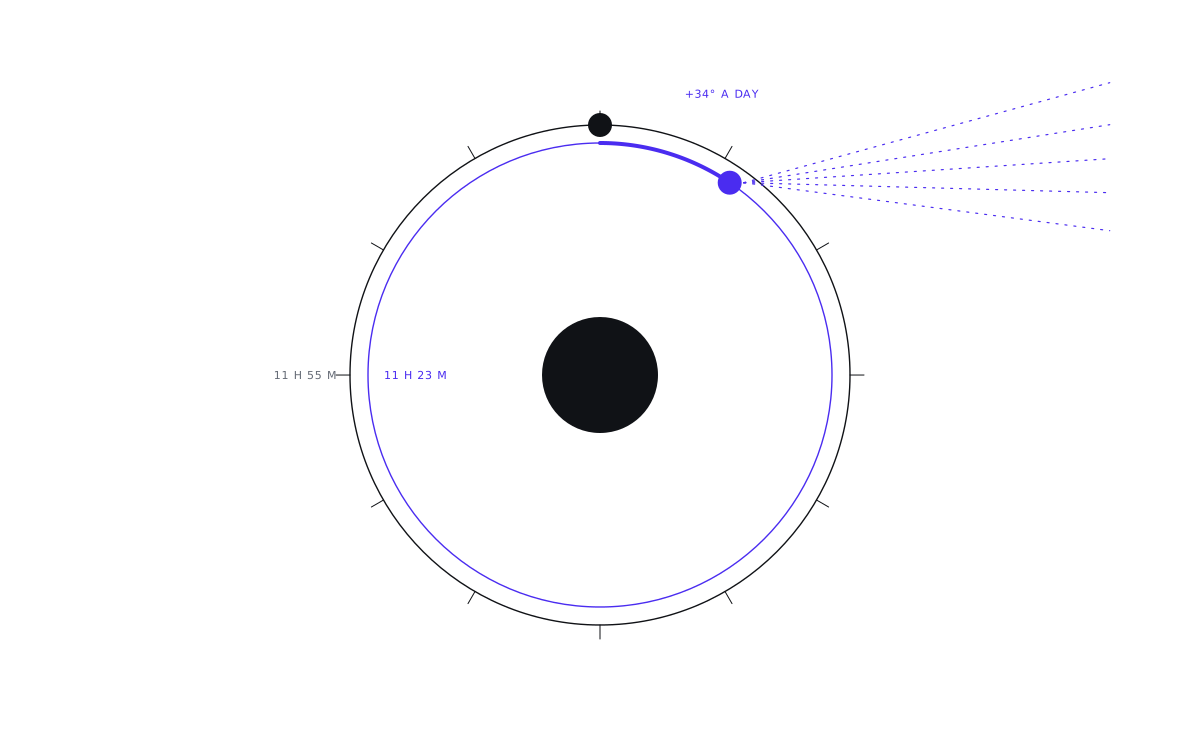
1.6 Metres a Second
Black Mirror's 41-minute chase film about a robot dog is thin on story and very good at being afraid. The real machines are faster than the first ones and still waiting for a mind.

Nearfi scores Black Mirror: Metalhead (2017) 7.4/10 as art. Maxine Peake and David Slade's monochrome camera turn a bare chase into the series' most physical, least talky piece of dread. As prophecy, its P(n) is 93%: Four-legged robots are on sale and armed ones have been demonstrated; the autonomous hunter that picks its own human target is the missing piece.
- Maxine Peake and David Slade's monochrome camera turn a bare chase into the series' most physical, least talky piece of dread.
- At 41 minutes there is almost no world and no argument, so the ending lands as a gag more than a verdict.
- It predicts the machine's body well and its mind badly: the legs have arrived, the judgement that would make it a hunter has not.
Four-legged robots are on sale and armed ones have been demonstrated; the autonomous hunter that picks its own human target is the missing piece.
- NEAR A ground robot identifies a human being as a target and pursues and kills them without a person authorising that attack.
- ARRIVING A four-legged robot carries a firearm and is used as a combat or security machine.
- ARRIVED A commercially available four-legged robot can walk and run across rough ground, up slopes and over obstacles without a human steering each step.
Four-legged robots are on sale and armed ones have been demonstrated; the autonomous hunter that picks its own human target is the missing piece.
When Boston Dynamics put its Spot robot on sale in June 2020, the spec sheet gave it a top speed of 1.6 metres a second and about 90 minutes on a battery. A fit person jogging leaves that behind. It is worth keeping those numbers in mind, because the best-known four-legged robot in fiction does not have them.
The dog in "Metalhead" is faster, stronger and has apparently no off switch. It is also 41 minutes of television, and it is the one reached for whenever a robot video goes round.
Spoilers follow.
The art: a chase with the colour taken out
The episode, written by Charlie Brooker and directed by David Slade, arrived on Netflix on 29 December 2017 as part of series four. It is shot in black and white. Slade suggested it, reportedly to recall old horror films and to suit the oppressive mood, and it had been considered for the series before but never used. It works. Grey sky and grey field are all it needs.
Maxine Peake plays Bella. She and two companions, Anthony (Clint Dyer) and Clarke (Jake Davies), drive to a warehouse to fetch something that will ease the pain of a dying friend. A four-legged guard robot sprays them with tracker-laden shrapnel and kills two of them. Bella runs. The rest of the episode is her trying not to be caught.
Brooker has said the idea came from watching Boston Dynamics videos, and that he found it creepy to watch the robots get knocked over. He has also named All Is Lost, the 2013 film with Robert Redford, as an influence on a story with almost no talk.
Peake is excellent, and the best thing about the film is how little she is given. She improvises with sweets, pliers and paint, trying to trick or blind a machine that cannot be reasoned with. The dog, by design, has no feelings: Slade has said it has enough AI to solve problems, and the intention was that it was meant as something deployed in a war rather than a warehouse guard.
The weakness is the one the premise cannot avoid. We never find out who built the dogs, who is still giving them orders or what the box in the warehouse is for. Then we do. It holds teddy bears. The idea is cruel in the right way: a group risked their lives for a dying friend's comfort and came back with a crate of toys. But it arrives after a short episode with no other texture, and critics at the time were split on whether it earned its place or was merely a stunt. I am on the side that thinks it is an effective piece of storytelling and a thin one.
The prophecy: the legs, the gun, the mind
Four bets sit inside the episode. We have scored them in the ledger. The short version is that the body is nearly here and the brain is not.
The legs. This one has arrived. Spot went on sale in 2020 for US$74,500, and companies in China now sell bigger machines. Unitree lists its B2 at more than 6 metres a second in special configurations, with a safety limit in practice, and four to six hours per battery. The real robots still struggle with glass, mirrors and holes, as their own user guides admit. The episode's dog can do things no catalogue dog can. But the shape is right, and the shape arrived about three years after the episode aired.
The gun. In October 2021 Ghost Robotics and SWORD International showed a four-legged robot with a 6.5mm Creedmoor rifle at the US Army's annual convention in Washington. In May 2024 China showed rifle-armed robot dogs at the Golden Dragon drills with Cambodia. Both were reported as remote-controlled, and in Cambodia the weapons were not fired, the handlers just walking the robots on leashes. Real armed ground robots in combat look different: in Ukraine they are mostly tracked or wheeled vehicles, with a person at the controls. The dog, as a gun platform, is a demonstration. It is not yet a unit.
The hunt. This is the part the episode is about, and it is the part that hasn't arrived. Nobody has reported a ground machine that picks a human being and pursues them without a person authorising it. The US Defense Department's 2023 directive on autonomy in weapons does not ban such a thing. It requires senior review, which can be waived, and says commanders should keep "appropriate levels of human judgment". Human Rights Watch notes that the key terms are undefined and that targeting people is not prohibited. The barrier, in other words, is a policy and a habit. That is an odd thing for the most important prediction in a story to rest on.
The stamina. The dog keeps coming, and keeps getting back up. Real quadrupeds run for hours, not days, and Unitree lists autonomous charging only as an option. It is the least dated detail in the episode and the one most likely to be solved by a better battery rather than a better idea.
The reading
What the episode understood, before the industry did, is that the horror is not the robot's intelligence but its patience. The dog is not clever. It is persistent, and a persistent thing with a gun has a long list of advantages over a person who has to sleep. That reading holds up better than the plot's attempts at a twist.
What it missed is how the first real versions would be sold. Spot's makers said in 2020 that it was for commercial use, not for fun. The armed versions arrived as remote-controlled demonstrations at trade shows, with a human in the loop and a spokesperson to explain why. The scary part of the real future is not that someone built the dog. It is that the argument about whether to let it decide has already started, and is being had in the language of review boards.
The episode closes on the point it has been making for 41 minutes: the dogs do not stop, and there is always another one. It is a modest, cold, well-made film. The machines have the legs now. Whether they get the rest depends on rules that are still written in pencil.
What it predicted, and what happened
The hardware is further along than the episode's reputation suggests: four-legged robots are on sale, and armed ones have been shown by at least two militaries' suppliers. What is still missing is the part the episode runs on, a machine that picks a human target and pursues it with no person in the loop.
How this P(n) was calculated
P(n) is the chance that this work's future arrives within 20 years, by 2046. For each prediction we turn our estimate into a probability: arrived is 100%, diverged is 0%, and otherwise the low end of our 80% range counts as a 10% chance, the median year 50% and the high end 90%. Each prediction is weighted 1–5 by how pivotal it is to the story, and P(n) is the weighted average. P50 does the same by 2076. P(n), explained.
| Claim | Prediction · why this weight | Weight | Status · estimate | By 2046 | By 2076 |
|---|---|---|---|---|---|
| MH-1 | A commercially available four-legged robot can walk and run across rough ground, up slopes and over obstacles without a human steering each step. Supporting: the dog's mobility is what makes escape hard, but the episode's fear is aimed at what it does, not how it walks. |
3 | ARRIVED arrived 2020 | 100% | 100% |
| MH-2 | A four-legged robot carries a firearm and is used as a combat or security machine. Major: the dog's gun and shrapnel are how it kills, and the whole episode is about being hunted by one. |
4 | ARRIVING 2029 (2026–2036) | 100% | 100% |
| MH-3 | A ground robot identifies a human being as a target and pursues and kills them without a person authorising that attack. Core premise: the dog's autonomous hunt of Bella is the entire episode; nothing else would happen without it. |
5 | NEAR 2036 (2029–2050) | 79% | 100% |
| MH-4 | A legged robot can chase a person across country for hours at speeds a human cannot match, and recharge itself without help. Supporting: the dog's speed and stamina make Bella's escape a problem of endurance, but the plot turns on its weapons and its judgement. |
3 | ARRIVING 2030 (2027–2038) | 100% | 100% |
| P(n) = P20 = Σ(weight × chance by 2046) ÷ Σ weight = 13.9 ÷ 15 = 93% | |||||
| P50 = 15.0 ÷ 15 = 100% | |||||
Already here today (arrived 1, arriving ½, weighted): 43%.
-
MH-1
A commercially available four-legged robot can walk and run across rough ground, up slopes and over obstacles without a human steering each step.
Weight 3/5 · Supporting: the dog's mobility is what makes escape hard, but the episode's fear is aimed at what it does, not how it walks.
Boston Dynamics put Spot on sale in June 2020 at US$74,500 for commercial use, and Chinese makers such as Unitree now sell larger quadrupeds. The real machines still fall over, misread glass and mirrors, and have to be told where to go. The walking is solved; the judgement is not. 12
-
MH-2
A four-legged robot carries a firearm and is used as a combat or security machine.
Weight 4/5 · Major: the dog's gun and shrapnel are how it kills, and the whole episode is about being hunted by one.
Ghost Robotics and SWORD International showed a quadruped with a 6.5mm Creedmoor rifle at the US Army's annual convention in October 2021, and China displayed rifle-armed robot dogs at the Golden Dragon drills with Cambodia in May 2024. Both were reported as remote-controlled, and the Chinese weapons were walked, not fired, in front of journalists. Armed, fielded and used in combat is a step further. 345
-
MH-3
A ground robot identifies a human being as a target and pursues and kills them without a person authorising that attack.
Weight 5/5 · Core premise: the dog's autonomous hunt of Bella is the entire episode; nothing else would happen without it.
No fielded ground machine is reported to do this. The US Defense Department's 2023 directive on autonomy in weapons does not ban autonomous systems that target people; it requires senior review, which can be waived, and asks for 'appropriate levels of human judgment'. The legal bar is a policy, not a treaty, and the technical gap is perception and judgement in clutter rather than mobility. The date is a judgement about doctrine as much as engineering. 678
-
MH-4
A legged robot can chase a person across country for hours at speeds a human cannot match, and recharge itself without help.
Weight 3/5 · Supporting: the dog's speed and stamina make Bella's escape a problem of endurance, but the plot turns on its weapons and its judgement.
Boston Dynamics' 2019 spec sheet gave Spot a top speed of 1.6 m/s and about 90 minutes of runtime. Unitree lists its B2 at more than 6 m/s in special configurations, 4 to 6 hours per battery and optional autonomous charging. The speed is a lab-grade claim with a safety limit in practice, and autonomous charging is listed only as an option. 910
- FOR Boston Dynamics' Robot Dog Price and Availability. IEEE Spectrum, 2020-06-16. Spot went on sale to commercial buyers; the user guide lists holes, cliffs, slippery surfaces and glass as hazards.
- FOR Unitree B2. Unitree Robotics. Manufacturer page for a larger quadruped, with payload, endurance and speed figures; some functions need human operation.
- FOR Robot Dogs With Assault Rifles Unveiled at AUSA 2021 Convention. The Defense Post, 2021-10-13. A quadruped carrying SWORD International's rifle was shown in Washington; it was described as mainly remote-controlled.
- FOR China Shows off Robot 'Dogs of War' in Cambodia Drills. The Defense Post, 2024-05-16. Rifle-armed robot dogs appeared at the Golden Dragon 2024 opening; they were remote-controlled and only walked on leashes.
- AGAINST Ukraine's killer robots are showing how war is changing. RTE Brainstorm, 2026-05-01. Ukraine's armed ground robots are used in direct combat but are remotely operated, and they are wheeled or tracked rather than legged.
- CONTEXT Pentagon updates guidance for development, fielding and employment of autonomous weapon systems. DefenseScoop, 2023-01-25. The revised DoDD 3000.09 requires senior-level review and 'appropriate levels of human judgment' over the use of force.
- FOR Review of the 2023 US Policy on Autonomy in Weapons Systems. Human Rights Watch, 2023-02-14. The policy does not prohibit autonomous weapons that target people; senior review can be waived for urgent need, and the key terms are undefined.
- AGAINST Ukraine's killer robots are showing how war is changing. RTE Brainstorm, 2026-05-01. The author says today's armed ground robots in Ukraine are remotely operated, not fully autonomous, and calls for humans to stay in control.
- FOR Unitree B2. Unitree Robotics. Over 6 m/s in special configurations, 4 to 6 hours per battery, optional autonomous charging; a speed limit applies in practice.
- AGAINST Spot Robot Specifications. Boston Dynamics, 2020-05. Max speed 1.6 m/s, average runtime 90 minutes, recharge time 120 minutes: the first commercial quadruped was slower than a person running.
Ledger updated 5 Nov 2026. Open this ledger as its own page · The P(n) Board · Method
Themes: AI and machine minds · Surveillance and scoring