The Call Is Coming From Inside
Black Mirror's haunted-house horror about a paid game test is a better thriller than prophecy. The implant is far off; the fear-reading game is already on sale.

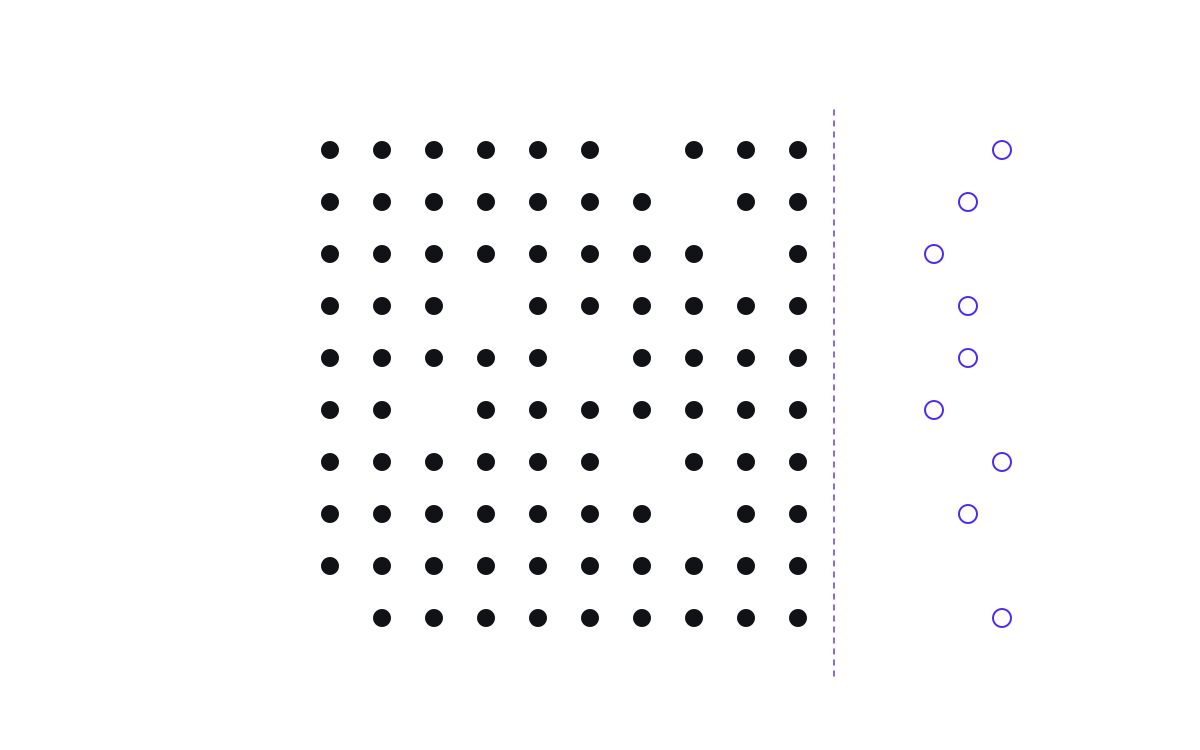
Nearfi scores Black Mirror: Playtest (2016) 7.4/10 as art. Dan Trachtenberg stages the haunted house with real craft, and Wyatt Russell makes a flaky backpacker easy to fear for. As prophecy, its P(n) is 66%: Augmented-reality games are ordinary and horror games that read your pulse are on sale; the neck implant that writes fears directly onto your senses is decades away, if it comes at all.
- Dan Trachtenberg stages the haunted house with real craft, and Wyatt Russell makes a flaky backpacker easy to fear for.
- The final reveal undoes the horror it spent fifty minutes building, and several critics found it a cheat.
- Its most accurate detail is the wrong way round: games that read your pulse exist, but nobody has an implant that paints on your senses.
Augmented-reality games are ordinary and horror games that read your pulse are on sale; the neck implant that writes fears directly onto your senses is decades away, if it comes at all.
- FAR A small neck implant lets a company write convincing, fully immersive experiences straight into a person's senses, indistinguishable from reality.
- ARRIVING A horror game uses a neural network to learn each player's particular fears and builds scares from them in real time.
- ARRIVED Augmented-reality games that place interactive characters and targets into the real world are a mass-market product.
Augmented-reality games are ordinary and horror games that read your pulse are on sale; the neck implant that writes fears directly onto your senses is decades away, if it comes at all.
The one rule at SaitoGemu is that phones stay off. Cooper switches his back on.
He does it to take a photograph of the test kit for Sonja, a journalist he met in a London bar. It's a small, selfish, entirely human act, and by the end of the episode it has killed him. Spoilers follow.
"Playtest" is the second episode of series three of Black Mirror, released on Netflix on 21 October 2016. It runs 57 minutes. Charlie Brooker wrote it and Dan Trachtenberg directed, and both men had worked as games journalists before they worked in screens. You can feel it in the way the episode knows exactly what a playtest is: a stranger, a non-disclosure agreement, and the polite fiction that nothing here can hurt you.
The art: a haunted house with a legal department
Cooper (Wyatt Russell) is an American travelling to avoid his mother's calls after his father's death from Alzheimer's. In London, identity theft empties his account, and the only quick money on offer is a paid test for SaitoGemu, a games company. Katie (Wunmi Mosaku) runs the session. She fits him with a "mushroom", a device implanted in his neck. First comes an augmented-reality Whac-A-Mole, which is a joke and a warm-up. Then the owner, Shou (Ken Yamamura), explains that the next game uses a neural network to tailor its scares to the player's own fears.
That is the whole machine, and it is a good one. Because the game draws on what Cooper actually dreads, the scares are specific: a spider, a figure in a painting, and a simulation of the boy who bullied him as a child. Trachtenberg shoots the sequence like a survival-horror game, with long corridors, a creaking house and the sense that the next door is the one. The spider effects came from Framestore, and the episode was nominated for a BAFTA Craft award for visual effects. The house is genuinely frightening, partly because the hardware around it stays so calm.
Russell is the reason it works. Cooper is hard to like. He ignores his mother's calls and sneaks his phone into the test. Trachtenberg has said Russell's casting made that arrogance easier to forgive, and Russell makes him boyish rather than awful, so that when the house starts taking him apart you are on his side. Hannah John-Kamen has the harder job as Sonja, who has to be believable as a person and as a hallucination, sometimes in the same scene.
The trouble is the ending. After fifty minutes of escalating dread, the episode reveals that the whole session lasted a fraction of a second. A phone call from his mother interfered with the device and killed him, and everything afterwards happened only in his head. The reveal has a cruel logic. But it also erases most of what we have watched. Critics split on it, and some called it a cheat or a dark joke. I think it works as a gag and fails as a tragedy: we are asked to grieve for a man whose suffering we have just been told was never real. That's the gap between 7 and 8.
The prophecy: the game, the implant, the call
The game that reads you. This is the part Brooker got closest to. In late September 2015, a year before the episode aired, a horror game called Nevermind went on sale on Steam. It reads the player's heart-rate variability, with a camera or a heart-rate sensor, and gets harder the more stressed you become. MIT Technology Review described it that month, and its creator, Erin Reynolds, wanted players to learn to manage anxiety rather than just enjoy it. A 2015 study of 16 players found that frightening moments show up clearly in physiological signals. The limit, as the same coverage noted, is that a pulse shows that you are stressed but not why. The version in the episode, which learns your particular dread and builds a spider out of it, is a step beyond. It is a software problem, not a hardware one, and it is the likelier route to the thing Shou describes.
The AR in everyone's pocket. In July 2016, three months before the episode, Pokémon Go launched, and Apple said it had been downloaded more than any other app in its first week. By late 2022 it had passed 600 million downloads. The Whac-A-Mole gag that opens the test would have looked like a satire of a trend and turned out to be a description of one.
The implant. Here the episode runs far ahead of the lab. The real devices read the brain far better than they write to it. A 2025 study in Cell put electrodes in the motor cortex of four people with ALS or brainstem stroke and decoded imagined sentences with accuracy of up to 74%, from a vocabulary of up to 125,000 words. The team added a password so the system would only read inner speech when its user chose to unlock it. Writing is harder. Neuralink's Blindsight, which aims to produce vision by stimulating the visual cortex, received an FDA breakthrough-device designation in September 2024 and remains experimental, with early resolution expected to be low. Nobody has shown a device that can put a convincing spider, a bully and a woman he met the night before into someone's senses at once. That's the premise of the episode, and it is a long way off.
The call. The mechanism of Cooper's death has a real cousin and a real difference. In 2021 the FDA warned that magnets in some phones and smartwatches can put certain implanted devices, such as defibrillators, into "magnet mode", and it advised keeping them six inches away. But the agency also said it believed the risk was low and knew of no adverse events. And it was the magnet, not the call. The episode's moral, that the most dangerous thing in the room was an ordinary phone, is wrong in its detail and right in its spirit.
The reading
"Playtest" is a clever, nasty piece of genre craft with a bad habit of explaining itself. As a horror episode it holds up. As a prediction it gets the culture right and the hardware wrong, which is the usual way round. What it understood best is the setup rather than the technology. A young man runs out of money, an unregulated company offers a lot of cash for a small risk, and a form says he agrees to all of it. That was the real near future in 2016, and it is not especially futuristic now.
Cooper thinks he spent a night in a haunted house. By the episode's sums, he spent less than a heartbeat. The longest night took a second, and the only thing that could stop it was his mother, who had been calling all along.
What it predicted, and what happened
Playtest is closer on the software than the hardware. Augmented-reality games are ordinary and horror games that read a player's pulse have been on sale since 2015, but a brain implant that writes convincing experiences into the senses has not been shown in any form. Its device-interference ending has a real cousin, though the cause and the risk are different.
How this P(n) was calculated
P(n) is the chance that this work's future arrives within 20 years, by 2046. For each prediction we turn our estimate into a probability: arrived is 100%, diverged is 0%, and otherwise the low end of our 80% range counts as a 10% chance, the median year 50% and the high end 90%. Each prediction is weighted 1–5 by how pivotal it is to the story, and P(n) is the weighted average. P50 does the same by 2076. P(n), explained.
| Claim | Prediction · why this weight | Weight | Status · estimate | By 2046 | By 2076 |
|---|---|---|---|---|---|
| PLAY-1 | A small neck implant lets a company write convincing, fully immersive experiences straight into a person's senses, indistinguishable from reality. Core premise: the mushroom implant is the story's engine and its twist. |
5 | FAR 2090 (2060–2150) | 6% | 31% |
| PLAY-2 | Augmented-reality games that place interactive characters and targets into the real world are a mass-market product. Supporting: the Whac-A-Mole warm-up sets up the technology and its menace. |
3 | ARRIVED arrived 2016 | 100% | 100% |
| PLAY-3 | A horror game uses a neural network to learn each player's particular fears and builds scares from them in real time. Major: the personalised scare engine drives the whole test and Cooper's ordeal. |
4 | ARRIVING 2032 (2028–2045) | 91% | 100% |
| PLAY-4 | An ordinary phone can disrupt an implanted electronic device, with dangerous results. Supporting: it is the mechanism of the ending, but the plot turns on the implant. |
3 | ARRIVED arrived 2021 | 100% | 100% |
| P(n) = P20 = Σ(weight × chance by 2046) ÷ Σ weight = 9.9 ÷ 15 = 66% | |||||
| P50 = 11.6 ÷ 15 = 77% | |||||
Already here today (arrived 1, arriving ½, weighted): 53%.
-
PLAY-1
A small neck implant lets a company write convincing, fully immersive experiences straight into a person's senses, indistinguishable from reality.
Weight 5/5 · Core premise: the mushroom implant is the story's engine and its twist.
Brain implants are good at reading and poor at writing. Researchers have decoded imagined sentences from the motor cortex of four paralysed people with up to 74% accuracy, and Neuralink's Blindsight, which stimulates the visual cortex to produce an image, is experimental, with early resolution expected to be low. Nobody has shown a device that produces coherent multi-sense scenes, let alone a house, a person and a spider at once. The path needs both read and write access to many brain regions without surgery. The range is wide because this may never be built. 123
-
PLAY-2
Augmented-reality games that place interactive characters and targets into the real world are a mass-market product.
Weight 3/5 · Supporting: the Whac-A-Mole warm-up sets up the technology and its menace.
Location-based augmented-reality games reached mass scale in July 2016 with Pokémon Go, three months before the episode aired. It had passed 600 million lifetime downloads by November 2022. These games run on phones, not implants, and they overlay the world instead of replacing it, so they differ from the episode's seamless version. 45
-
PLAY-3
A horror game uses a neural network to learn each player's particular fears and builds scares from them in real time.
Weight 4/5 · Major: the personalised scare engine drives the whole test and Cooper's ordeal.
Games that adapt to a player's stress have been on sale since Nevermind launched on Steam in September 2015, using heart-rate variability to make the game harder as the player grows anxious. What exists responds to arousal, not to the content of a person's fears. A pulse sensor shows that someone is stressed but not why. Learning an individual's specific dreads and generating matching scares needs better sensing and generative software, which are both advancing, but no commercial title does it yet. 678
-
PLAY-4
An ordinary phone can disrupt an implanted electronic device, with dangerous results.
Weight 3/5 · Supporting: it is the mechanism of the ending, but the plot turns on the implant.
In May 2021 the FDA said that magnets in some phones and smartwatches can put certain implanted devices, such as defibrillators, into a mode that suspends normal operation, and advised keeping them six inches away. The cause is a magnet, not a radio call as in the episode. The agency judged the risk to patients to be low and knew of no adverse events, and a 2022 cardiology commentary called the risk overstated. We rate it ARRIVED as a documented effect, not as a common hazard. 910
- FOR Scientists decode inner speech from brain activity with high accuracy. News-Medical (reporting Cell, 14 August 2025), 2025-08-14. Implants in four people with ALS or brainstem stroke decoded imagined sentences with up to 74% accuracy; the team added a password so inner speech is only read when the user allows it.
- CONTEXT Neuralink says the FDA designated its Blindsight implant as a 'breakthrough device'. Engadget, 2024-09-18. Blindsight is meant to restore sight by stimulating the visual cortex; the device is experimental and the article calls the company some way off from restoring sight.
- AGAINST Inner speech in motor cortex and implications for speech neuroprostheses. Cell, 2025-08-14. The paper's own limits: decoding free-form inner speech remains error-prone, and it reads a narrow task from a handful of participants. Reading signals is far easier than writing a world.
- FOR Most downloaded iPhone app in its first week. Guinness World Records, 2016-07-01. Pokémon GO, Niantic's augmented-reality game, launched on 5 July 2016 and Apple said it had been downloaded more than any other app in its first week.
- FOR Pokémon Go has passed 600m lifetime downloads, nears $4.7bn revenue. MobileGamer.biz, 2022-11-03. AppMagic figures: over 600 million lifetime downloads and almost $4.7bn revenue after six years.
- FOR Nevermind, the World's First Biofeedback Horror Game, Has Launched. Just Adventure, 2015-09-30. The full game launched on Steam with support for pulse sensing; higher stress makes the game harder, and it can be played without sensors.
- FOR The body language of fear: fearful nonverbal signals in survival-horror games. DiGRA 2015 (Lancaster University), 2015-01-01. In a study of 16 players, frightening game events were clearly reflected in physiological signals, though body movement was an unreliable guide.
- AGAINST Keep Calm and Play On: Video Games That Track Your Heart Rate. MIT Technology Review, 2015-09-21. Describes Nevermind, and notes that heart-rate sensors show that a player is stressed but not why.
- FOR Magnets in Cell Phones and Smart Watches May Affect Pacemakers and Other Implanted Medical Devices. US Food and Drug Administration, 2021-05-13. FDA testing confirmed some products can trigger magnet mode, which can stop a defibrillator detecting a fast heartbeat.
- AGAINST Cardiac Implantable Electronic Devices and Consumer Electronic Devices: The Proof Is in the Front Pocket. Journal of Innovations in Cardiac Rhythm Management, 2022-07-01. A commentary judging the risk overstated: real-world cases are limited and distance matters a great deal.
Ledger updated 6 Nov 2026. Open this ledger as its own page · The P(n) Board · Method
Themes: Memory · AI and machine minds