A Statistic Goes to War
Charlie Brooker's soldier-implant episode borrows its title from a 1947 book whose famous number may have been made up. The implant is the part that hasn't arrived. The label always did.

Nearfi scores Black Mirror: Men Against Fire (2016) 7.0/10 as art. Malachi Kirby and Michael Kelly make a blunt idea hurt, and the reveal in the cell is the best scene in the hour. As prophecy, its P(n) is 49%: Armies have bought thousands of augmented-reality headsets and have long trained soldiers past their reluctance to kill, but an implant that rewrites what they see has no path.
- Malachi Kirby and Michael Kelly make a blunt idea hurt, and the reveal in the cell is the best scene in the hour.
- Anyone who has seen the title card can guess the twist long before Stripe does, and the ending is more muddled than haunting.
- The episode's real prophecy is the consent form: the soldier agreed to all of it, then had the memory of agreeing removed.
Armies have bought thousands of augmented-reality headsets and have long trained soldiers past their reluctance to kill, but an implant that rewrites what they see has no path.
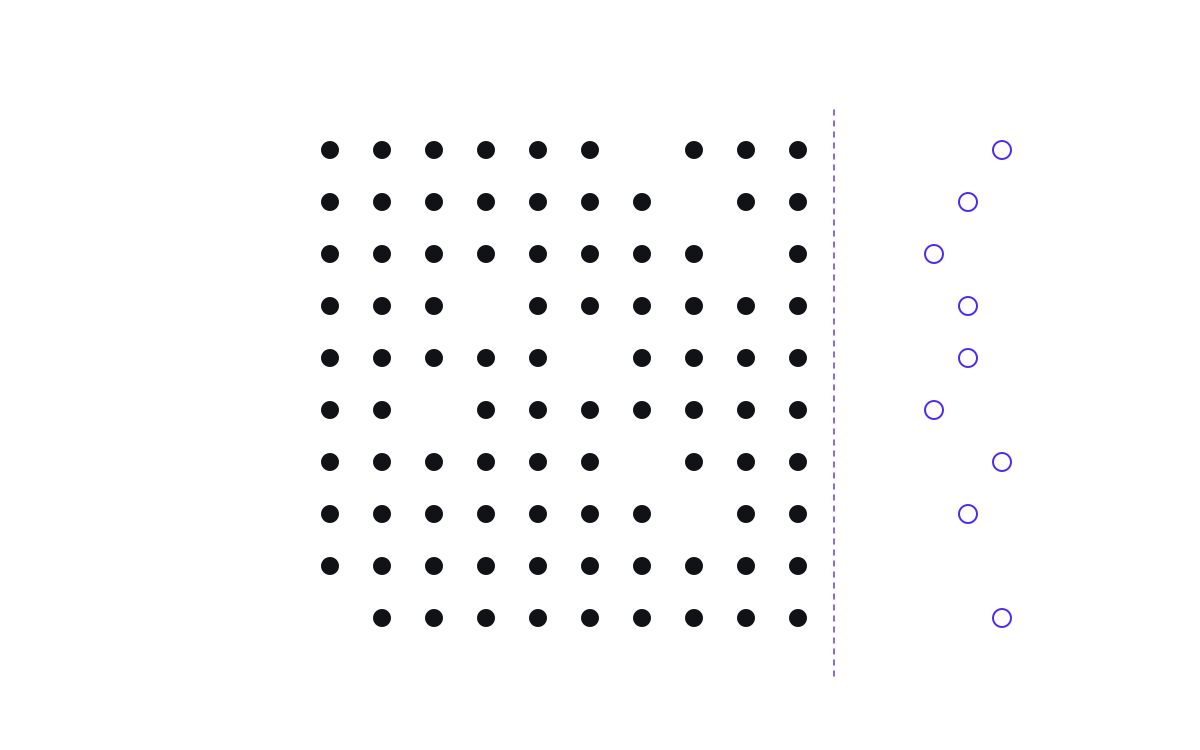
- FAR A neural implant rewrites in real time how soldiers perceive a group of people, so that humans look and sound like inhuman vermin.
- ARRIVED Armed forces deliberately condition soldiers to overcome their reluctance to kill.
- ARRIVING Infantry wear head-mounted displays that overlay navigation and target data on their view of the battlefield.
Armies have bought thousands of augmented-reality headsets and have long trained soldiers past their reluctance to kill, but an implant that rewrites what they see has no path.
The title is a quotation, and the quotation is shaky.
Men Against Fire is a 1947 book by the military historian S.L.A. Marshall, and its best-known claim is that most infantrymen in the Second World War never fired at the enemy. Armies took it seriously. Man-shaped targets replaced bullseyes on the range. Then, in 1988, Roger Spiller of the US Army's Combat Studies Institute asked where the numbers had come from, and a lot of historians have been unhappy about the answer ever since. Robert Bateman, writing in Military History, says Marshall's surviving notes contain no sign he ever asked a soldier whether he had fired. Charlie Brooker read the book while reworking this episode, which began life in 2010 under the title "Inbound", and renamed it. Not many television writers manage to build a dystopia on top of a disputed footnote, and fewer still do it knowingly.
The art: a hunt, then a room
The episode arrived on Netflix on 21 October 2016, with the rest of series three. Jakob Verbruggen directed. Malachi Kirby plays Stripe, a young soldier in a squad hunting "roaches": pale, snarling humanoids who live in the countryside. Madeline Brewer is Hunter, his squadmate. Sarah Snook leads the squad. Every soldier has an implant called MASS, which feeds them maps, targets and dream rewards, and (we learn) has been quietly editing their senses so that the people they are killing look like monsters.
It was shot in 18 days, near London, in a disused army barracks and a forest where a village was built. The brief called for something grimy and vaguely eastern European, and the budget kept it in Britain. Kristyan Mallett's team gave the roaches swollen, misshapen heads and ill-fitting clothes, and the actors wore black contact lenses. The roaches look more human from behind, which is an excellent small touch. The farmhouse raid is shot in a frantic scramble from the soldier's point of view.
Then it turns into a conversation. Stripe's implant glitches after a small LED device is used on him, and he wakes in a bright, bare cell across from Arquette, a military psychologist played by Michael Kelly. Kelly is the reason to watch. He doesn't loom. He talks like a man giving a staff briefing: the roaches are a group the state is purging as "genetic cleansing", the implant exists so that soldiers can kill without hesitation or remorse, and Stripe signed up for it before his memory was wiped. His offer is a choice. Have the implant and memory reset, or be jailed and made to watch what he actually did. Kelly gets the banality of it exactly right.
It isn't flawless. The mystery is played as a mystery for most of the hour, when anyone who has seen a dystopian film will have guessed. Critics called the central theme blunt, and they weren't wrong. The ending, with Stripe back in a house that is plainly derelict and has been in his head all along, has been read several ways by the cast and the director, and not one of the readings is better than the plain one. Most rankings of the series put it in the lower half, though TheWrap puts it third.
The prophecy: the headset, the label, the form
The headset. MASS shows soldiers what they should look at. That is half true now. The US Army bought around 10,000 IVAS headsets, a HoloLens-based display linked to weapon-sight cameras for navigation and target acquisition, under a deal first worth up to $22 billion over ten years. Soldiers reported headaches, eyestrain and nausea. A GAO report in July 2026 says none of those units will be fielded. The replacement, SBMC, is in prototyping with Anduril and Rivet, which won awards worth more than $350 million, and first scaled deliveries are slated for 2027. So the episode's display is on its way, only less polished than the version on screen. A Congressional Research Service note lists the risks, and one is misidentification that could lead to civilian casualties. That is the episode's whole nightmare, delivered by a software fault.
The implant. The part that doesn't exist. Retinal implants now give some blind patients usable reading vision (an NEJM trial of Science Corporation's PRIMA, reported in 2025, had 38 patients), and DARPA ran a programme to build a non-surgical read-and-write brain link for troops. Neither gets near rewriting what a squad sees and hears, live. Nor would anyone need to: a headset can draw a snarl on a face in the next decade, and it doesn't need surgery. So we put MASS a long way off, and note that the dangerous version of it is the one you wear.
The label. This is what the episode understands. The roaches don't have to be drawn on, because they were named first. The army talks about cleansing, the villagers repeat it, and the implant only makes the word visible. Hateful names for people came before any technology that could display them, and the episode quotes that history without crediting it. What is new is the pipeline: a label, then a display, then a decision made in a fraction of a second by someone who has been trained not to hesitate. That last part is real. Marshall's data are in doubt, but the armies listened to him anyway, and the target silhouettes went up.
The form. Arquette's last move is the one that stays. Stripe consented. The consent was real, and it was erased along with the thing consented to. We aren't close to deleting a memory: propranolol taken before a recall session lowered PTSD symptoms in a trial of 60 adults, and it appears to soften a memory's emotional charge, not remove it. But the shape of the arrangement, with consent buried in an enlistment paper and a continuing choice dressed as no choice at all, is familiar from anywhere that a worker agrees to terms nobody could read.
The reading
Men Against Fire is a better argument than it is a drama. The writing is blunt, the twist is telegraphed and the final shot is a muddle. The cell scene is excellent. The prophecy is sharper than the technology it is hung on: the implant is far away, the headset is nearly here, and the part that was never missing is the label. A statistic that may never have been true gave armies the target silhouettes they still use, and Brooker named his episode after it. The number may be fiction. The silhouettes are real.
What it predicted, and what happened
The episode's headset half has arrived in prototype: armies have bought thousands of augmented-reality displays for soldiers, though the programme has stumbled. Its implant half, which quietly rewrites what a soldier sees and then edits what he remembers, has no credible path inside fifty years. The idea underneath it, that soldiers must be trained past their reluctance to kill, is old, and it rests on a statistic historians dispute.
How this P(n) was calculated
P(n) is the chance that this work's future arrives within 20 years, by 2046. For each prediction we turn our estimate into a probability: arrived is 100%, diverged is 0%, and otherwise the low end of our 80% range counts as a 10% chance, the median year 50% and the high end 90%. Each prediction is weighted 1–5 by how pivotal it is to the story, and P(n) is the weighted average. P50 does the same by 2076. P(n), explained.
| Claim | Prediction · why this weight | Weight | Status · estimate | By 2046 | By 2076 |
|---|---|---|---|---|---|
| MAF-1 | Infantry wear head-mounted displays that overlay navigation and target data on their view of the battlefield. Supporting: the data feed is the channel the implant uses, but the plot turns on what it hides, not what it shows. |
3 | ARRIVING 2030 (2027–2040) | 96% | 100% |
| MAF-2 | A neural implant rewrites in real time how soldiers perceive a group of people, so that humans look and sound like inhuman vermin. Core premise: MASS is the episode's central device; without it there are no roaches and no twist. |
5 | FAR 2085 (2060–2150) | 6% | 36% |
| MAF-3 | Armed forces deliberately condition soldiers to overcome their reluctance to kill. Major: the whole episode dramatises this goal, and the implant is only its most extreme method. |
4 | ARRIVED arrived 1950 | 100% | 100% |
| MAF-4 | A soldier's memory of a specific act of killing can be selectively erased or reset, as a condition of continued service. Supporting: the reset is Stripe's final choice and drives the ending, but it comes after the central premise. |
3 | FAR 2080 (2055–2140) | 7% | 44% |
| P(n) = P20 = Σ(weight × chance by 2046) ÷ Σ weight = 7.4 ÷ 15 = 49% | |||||
| P50 = 10.1 ÷ 15 = 67% | |||||
Already here today (arrived 1, arriving ½, weighted): 37%.
-
MAF-1
Infantry wear head-mounted displays that overlay navigation and target data on their view of the battlefield.
Weight 3/5 · Supporting: the data feed is the channel the implant uses, but the plot turns on what it hides, not what it shows.
The US Army bought about 10,000 IVAS headsets, built on Microsoft's HoloLens, with navigation and target acquisition linked to weapon-sight cameras. It then dropped the line: a July 2026 GAO report says none will be fielded, after soldiers reported headaches, eyestrain and nausea. The follow-on, SBMC, is an 18-month prototyping effort with Anduril and Rivet. Scaled deliveries are talked of for 2027, so a working fielded system is close but not here. 123
-
MAF-2
A neural implant rewrites in real time how soldiers perceive a group of people, so that humans look and sound like inhuman vermin.
Weight 5/5 · Core premise: MASS is the episode's central device; without it there are no roaches and no twist.
Retinal implants now restore some reading vision, and military neurotechnology programmes have sought two-way brain-machine links, but both work at the scale of a few channels or a patch of retina. Nothing can read what a person sees and rewrite it live, across sight and sound, for a whole squad. A headset could alter a face on screen sooner and without surgery, so the implant may never be the route taken. The range assumes it is. 456
-
MAF-3
Armed forces deliberately condition soldiers to overcome their reluctance to kill.
Weight 4/5 · Major: the whole episode dramatises this goal, and the implant is only its most extreme method.
After S.L.A. Marshall's 1947 book Men Against Fire claimed that most riflemen never fired at the enemy, the US Army replaced bullseye targets with man-shaped ones and added rapid-fire drills. The premise is disputed: Roger Spiller's 1988 article challenged Marshall's data, and later writers call his figures unreliable. The training change is documented, and the real firing-rate rise attributed to it is argued over. The date is approximate: Marshall's ideas were taken up in the early 1950s. 789
-
MAF-4
A soldier's memory of a specific act of killing can be selectively erased or reset, as a condition of continued service.
Weight 3/5 · Supporting: the reset is Stripe's final choice and drives the ending, but it comes after the central premise.
Researchers have tagged and reactivated a memory in mice and planted a false fear. In humans, the nearest treatment is propranolol given before a recall session, which in a trial of 60 people with PTSD reduced symptoms but dampens a memory's emotional charge rather than deleting it. The authors call for replication. Nothing removes a chosen episode while leaving the rest of a life intact. Whether anyone would allow it as a term of employment is a separate question. 101112
- FOR Army's Integrated Visual Augmentation System (IVAS)/Soldier Borne Mission Command (SBMC). Congressional Research Service, 2026-07-20. Describes IVAS as a heads-up display linked to weapon sights, with about 10,000 units bought in 2022 and 2023.
- FOR Army awards more than $350M in contracts for Soldier Borne Mission Command system prototypes. DefenseScoop, 2025-09-08. The Army funds Anduril ($159m) and Rivet ($195m) to prototype soldier-worn AR headsets; first scaled delivery is slated for 2027.
- AGAINST US Army Won't Field Nearly 10,000 IVAS Goggles After $1.8B Investment: GAO. The Defense Post, 2026-07-10. The Army will not field the headsets it bought; the programme's problems show how hard soldier-worn displays are.
- CONTEXT Next-Generation Nonsurgical Neurotechnology (N3). DARPA, 2019. A completed programme aimed at a noninvasive read-write interface with 16 channels for service members, applied to drone control and multitasking.
- FOR Science Corp.'s PRIMA BCI Implant Restores Functional Central Vision, NEJM reports. Science Corporation, 2025-10-20. A trial of 38 patients shows an implant can write usable images to the visual system, but only in a small central patch of retina.
- AGAINST Army's Integrated Visual Augmentation System (IVAS)/Soldier Borne Mission Command (SBMC). Congressional Research Service, 2026-07-20. Notes the real risks of soldier displays, including misidentification that could cause fratricide or civilian casualties; the near-term threat is a corrupted display, not an implant.
- FOR S. L. A. Marshall. Wikipedia, 2026-11-06. Says Marshall's suggestions were widely adopted, with man-shaped targets replacing bullseyes, and that small-group doctrine helped raise firing rates in Korea and Vietnam.
- AGAINST Long Dead Hand: S.L.A. Marshall Misleads Historians. HistoryNet (Robert L. Bateman), 2018-11-15. Argues Marshall's ratio-of-fire figure was invented and that his notes record no question about who had fired, citing Spiller's findings.
- CONTEXT On Killing. Wikipedia, 2026-11-06. Summarises Dave Grossman's argument that training and desensitisation raised firing rates, and the criticism of its reliance on Marshall.
- CONTEXT Mice "incepted" with false memories provide insight into neural phenomena. RIKEN, 2013-07-26. Light was used to reactivate a tagged memory and attach a false fear to it in mice.
- FOR Propranolol may help PTSD patients. Psychiatric News Alert, 2018-01. Reports Brunet and colleagues' trial of 60 adults, with propranolol before trauma recall and lower symptom scores at six months, and a call for replication.
- AGAINST Effects of Propranolol, a β-noradrenergic Antagonist, on Memory Consolidation and Reconsolidation in Mice. Frontiers in Behavioral Neuroscience, 2016. Suggests the drug alters a memory's emotional valence, not its contextual content, so it dampens rather than deletes.
Ledger updated 6 Nov 2026. Open this ledger as its own page · The P(n) Board · Method
Themes: Clones and genetics