The Best Near-Future Sci-Fi Books: 10 Novels, Ranked
Every near-future novel we've reviewed, ranked by how good it is as a book, with a note on how much of its future has turned up.
The best near-future sci-fi novel we've reviewed is Kazuo Ishiguro's Never Let Me Go. William Gibson's Neuromancer and John Brunner's Stand on Zanzibar follow closely, and all three carry our Essential Future badge. After them come Klara and the Sun, Snow Crash and Super Sad True Love Story.
This is every novel in our archive, ranked by our review score, which judges the book as a book. Each card also carries a Nearness reading, which tells you how far its imagined future is from where we are now. The two don't always agree. Some of the sharpest prophets here are clumsy novelists, and one of the best novels is set in a past that never happened. The bottom of the list is here for honesty's sake. The Water Knife and The Circle are weak novels with strong records on the facts, and we'd rather tell you that than drop them quietly.
Every pick links to the full review and its prediction ledger, where each claim the book made is marked as arrived, arriving, near, far or diverged. If you'd rather watch than read, see the best near-future sci-fi movies. If machines are your subject, see sci-fi about AI.
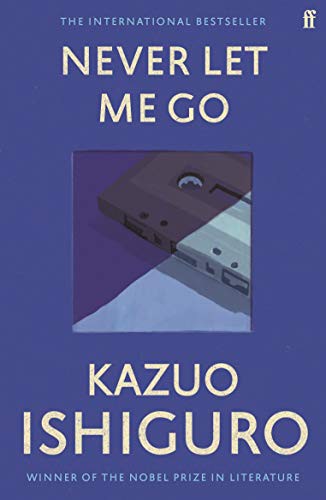
Kathy H., a carer aged thirty-one, tells you about her boarding school, Hailsham, in a voice so reasonable you could mistake it for a training manual. You work out what the children are for long before she says it. It's a near-perfect novel with one speech too many. Strictly, it's an alternative England of the late 1970s to the 1990s, and its technology diverged: transplant science turned to gene-edited pigs, not cloned children. Its real prediction needed no clone. It's about how institutions win the consent of the people they use up. Read it if you want to be quietly wrecked.
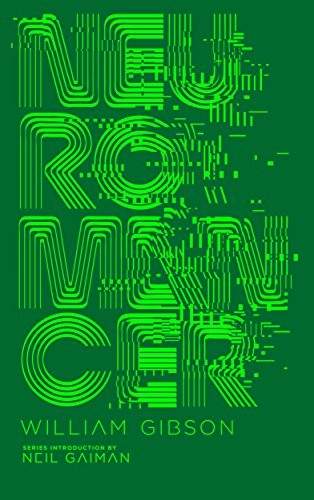
Gibson guessed the size of the internet four decades early: "billions of legitimate operators", in a book typed on a manual typewriter in 1984. He got the shape wrong. Nobody falls into a neon grid; we look down at a phone. The prose is the event, all brand names and slang, and the heist plot is harder to follow than it should be. Read it for Wintermute, an AI working to slip its legal limits by getting people to do things for it. That fear still bites. The gap between this and a 9 is the gap between a mood and a story.
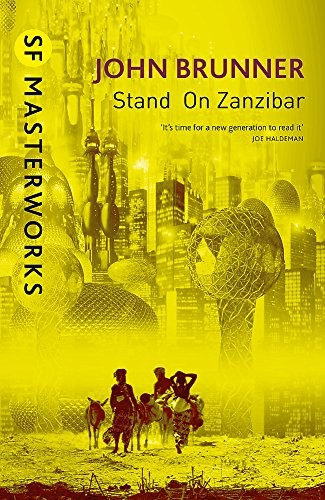
Writing in the 1960s, Brunner reckoned on about seven billion people by 2010. The UN marked the seven-billionth on 31 October 2011, so he was out by about a year. That trivia is real, and it's the least interesting thing here. The prediction is the form: a collage of news items, adverts and fragments he called "The Happening World", a feed written decades before anyone scrolled one. It's uneven, overlong and juvenile about sex, with a spy plot from a cheaper book. Its big miss: genetic sorting came from clinics with price lists, not state eugenics boards.
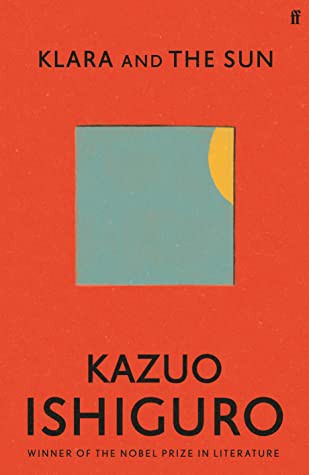
Klara is an Artificial Friend, a solar-powered companion bought for a sickly girl, and she narrates in careful, formal English while building a religion around the Sun. Ishiguro never tells you whether her faith works. The middle asks for more patience than it repays, but the last chapters, in a place called the Yard, are as good as anything he has written. As prophecy it's half here. Companions for children are on sale, and AI copies of the dead are a product. The book's true fantasy is a companion whose love isn't a retention metric.
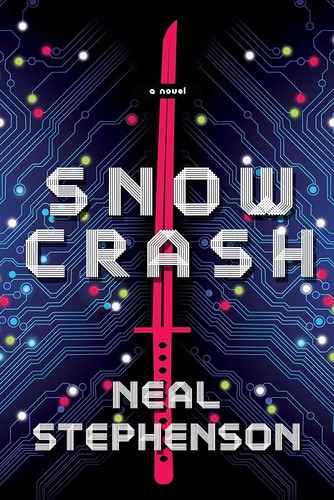
The novel that coined "metaverse", and the one Facebook borrowed from when it renamed itself Meta in 2021. Engineers read it as a spec sheet and skipped the jokes, which were the point. Stephenson's America has sold itself off one franchise at a time, and the only institution still running on time is a Mafia pizza chain. Self-governing enclaves, private money and images used to hurt the people who see them have all turned up in some form. It's a cartoon with a reading list. Come for the virtual world and stay for the satire, which has aged better.
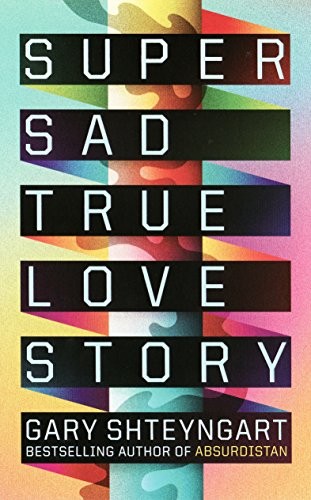
Published in July 2010, weeks after the iPhone 4, it gives every American a pendant called an äppärät that streams their data and ranks them against everyone in the room. It's the funniest prophecy on our shelf and, about the object in your hand, the most accurate. As a novel it's lopsided: too pleased with its jokes for two-thirds of its length, genuinely moving in the last third, and stingy with Eunice's voice. It got America's collapse wrong, because the Chinese creditors never took over. It got the phone, the self and the score exactly right.
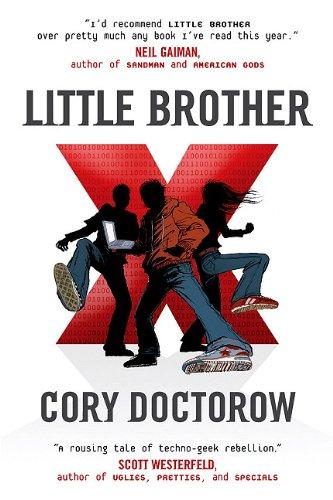
Seventeen-year-old Marcus Yallow puts gravel in his shoes to beat his school's gait-recognition cameras, and the book never quite decides whether it's a story or a set of instructions. Doctorow wrote it in eight weeks, and you can feel the fury and the haste. The speeches run long. The prophecy is close to a clean sweep: toll-tag tracking, gait recognition and a domestic dragnet of phone records all arrived. What it missed is who would do the watching. Mostly it was companies, and people carried the trackers willingly. It's free to read under a Creative Commons licence.
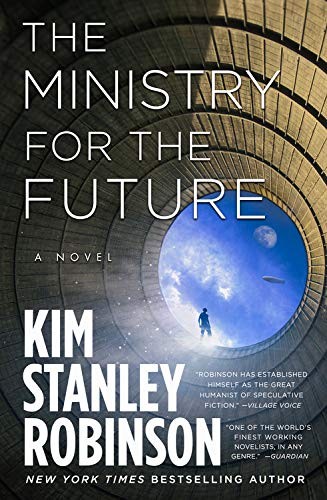
The first chapter, a 2025 heatwave in northern India that kills around 20 million people, is the one to read if you only read one chapter of any climate novel. After that the book becomes a policy brief with a plot: dazzling as a brief, often a chore as a novel. Robinson got the shape of the arguments right, from humid heat to central bankers to geoengineering by whoever moves first. The carbon coin and the cooperative politics that rescue his second half are still on paper. It's here because it refuses to despair and asks to be checked.
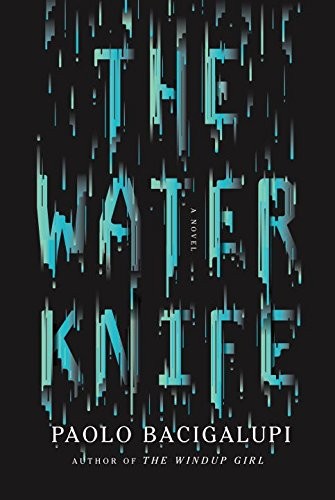
In Bacigalupi's American Southwest, Arizona loses the Colorado River and Nevada keeps it. Read in 2026, the politics feel like the minutes of a meeting: federal cuts to the lower-basin states, homes on the edge of Phoenix cut off, and the federal government paying a tribal community to leave water in Lake Mead. The plot still reads like a novel, and not a very good one. It's wrong so far about the guns, since no state has closed its border to another, and about Phoenix, which keeps growing. Right about the river, wrong about the weapons.
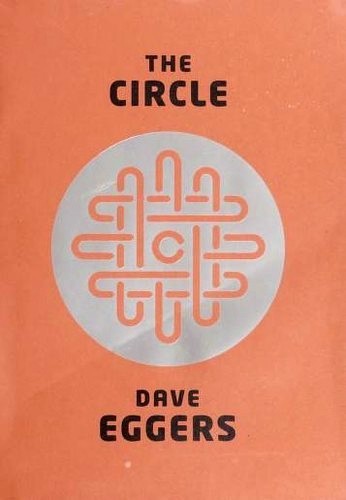
The weakest novel here, and a better prophet than its reputation. Eggers foresaw networked cameras the police can search, genealogy databases used to track people down, and the single real-name login. He got the motive wrong. The real platforms never preached transparency. They asked for engagement and kept their own workings secret. As art it's a smart essay wearing a novel's clothes, and the clothes don't fit, because Eggers never believed anyone would want to live there, so he never wrote the people who did. Read it for the ideas, or read our review and keep your weekend.
What counts as near-future sci-fi?
For Nearfi, it's fiction about the next 5–15 years rather than the year 3000: a world close enough to check against the news. Several books here were written decades ago, so their futures are now our present, which is what makes them worth grading. Never Let Me Go bends the rule, since it's an alternative past, but the question it asks about consent is entirely ours.
Which near-future novel predicted the most?
On our ledgers, three novels tie at 75%: Stand on Zanzibar, Snow Crash and Little Brother. That score counts an arrived prediction as one and a partly arrived one as half. It measures how much of a book's future is already here, not how good the book is, which is why Little Brother outscores Never Let Me Go on the P(n) Board and trails it on this list.
Is Neuromancer still worth reading?
Yes, with patience. We gave it 8.7. The plot is hard to follow and Case is a hole in the middle of his own book, but the prose is still electric, and its picture of an AI manipulating humans to escape its legal limits reads better now than in 1984. Gibson got the scale of the network right and the shape wrong.
Which of these should I read first?
If you like literary fiction, start with Never Let Me Go or Klara and the Sun. Both read as novels first and science fiction second. If you want to laugh, try Super Sad True Love Story or Snow Crash. If you want a book that will change how you look at the cameras on your street, read Little Brother.